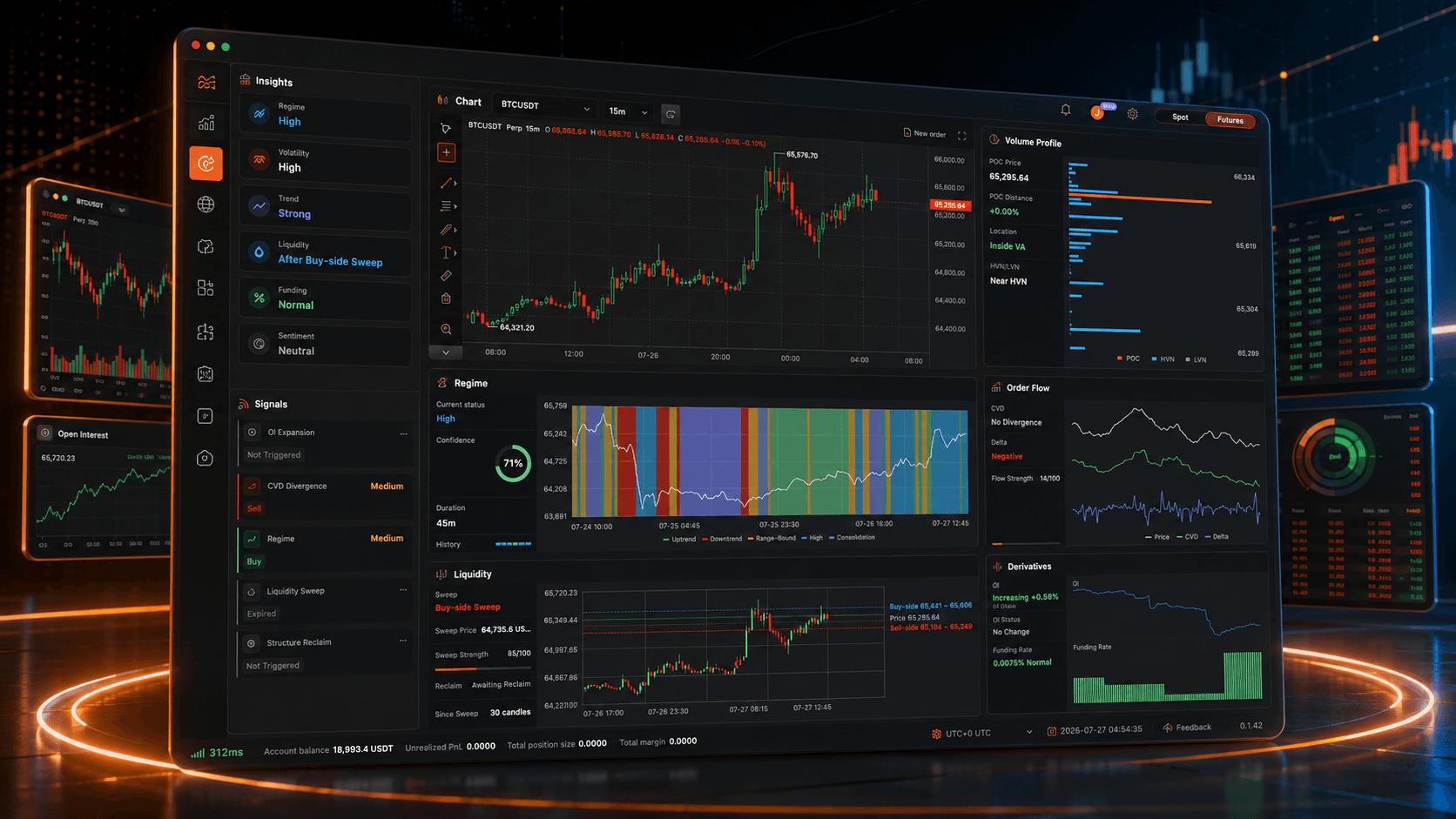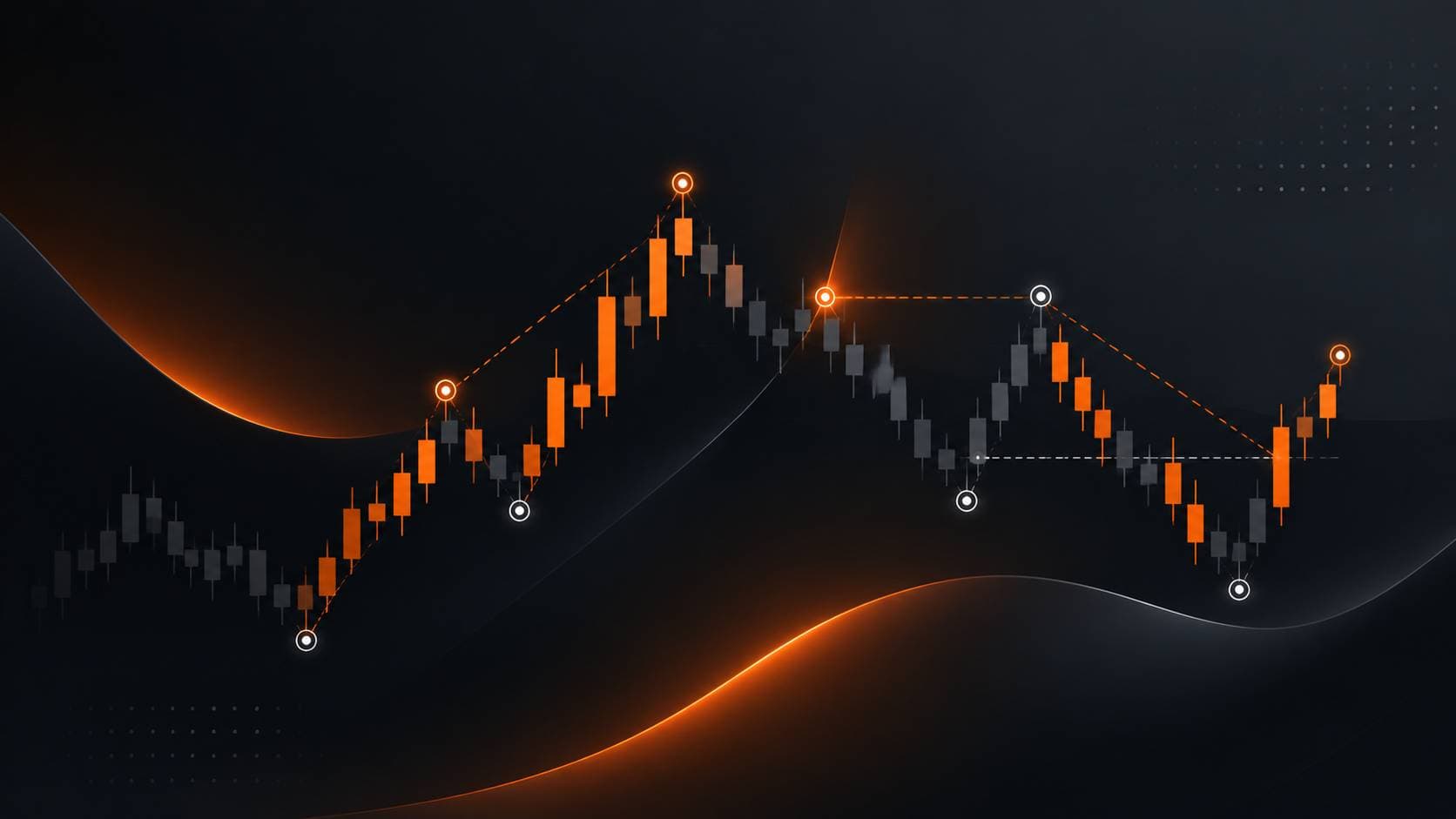
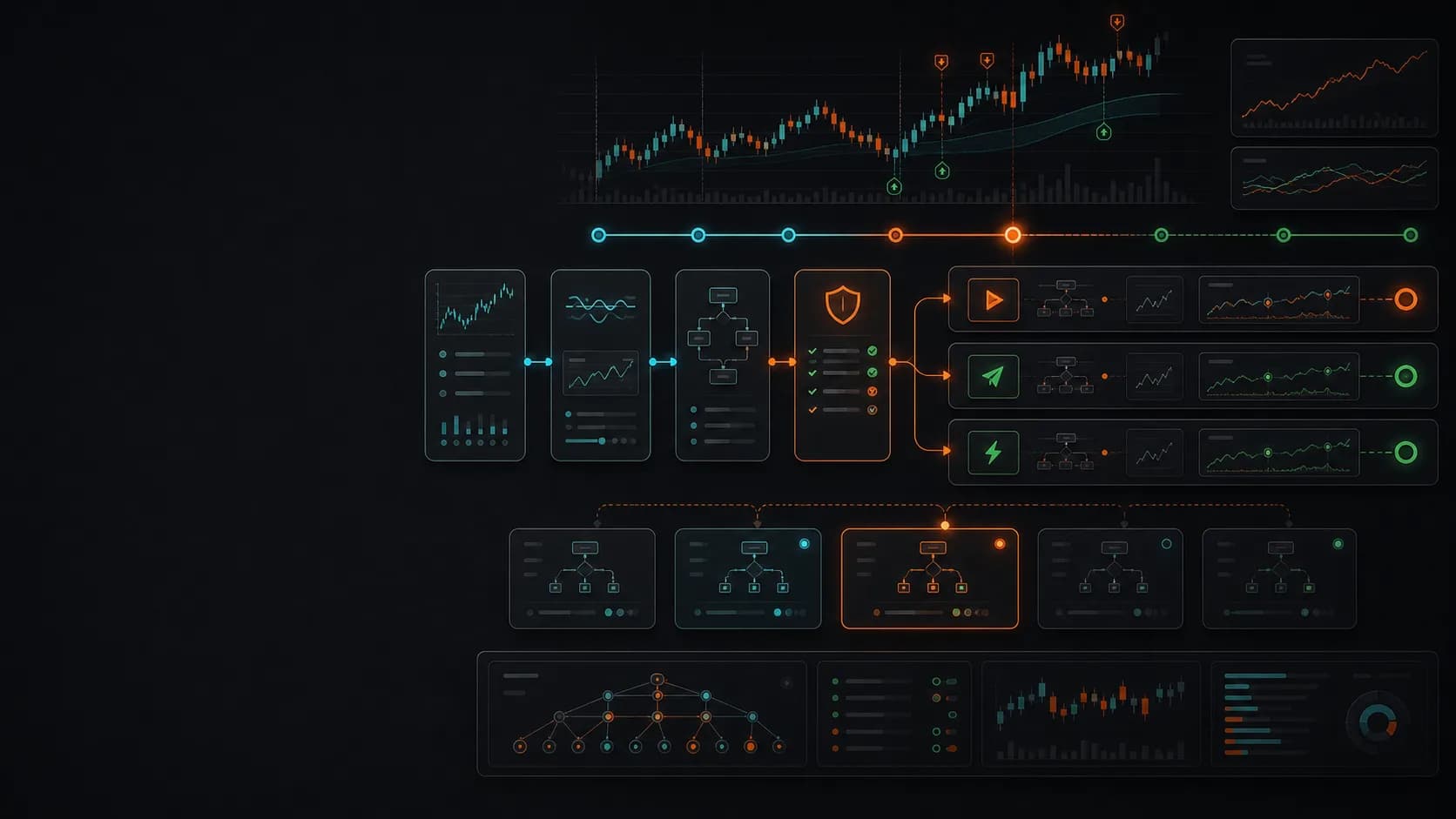
The node graph is the entry point, runtime evidence is the key
A strategy canvas makes trading logic visible, but the important question is whether the run can be verified. NavaX blueprints are designed so node order, conditions, order intent, and chart marks can all leave evidence.
That means a backtest is not only an equity curve. Users can go back to each candle and inspect why a strategy entered, skipped, or triggered a risk guard.
Order intent comes before real execution
The blueprint runtime produces reviewable order intent before it reaches paper or live execution. This gives risk, exposure, cooldown, and frequency checks a chance to work before any order is placed.
- market:read handles market and context input
- trade:intent expresses reviewable order actions
- risk guards handle constraints before execution
One structure covers backtest, paper, and live
When backtest and live logic drift apart, strategy iteration becomes harder to maintain. Blueprints should reuse the same structure as much as possible so research, simulation, and execution do not require repeated rewrites.