After years of trading, I've noticed that many traders eventually run into the same problem.
When the market starts moving higher, they're afraid of missing out, so they chase the price—only to watch the market pull back immediately after entering.
When the pullback finally comes, they're worried about missing the next move, so they buy too early—only to see the market continue falling.
Then a breakout appears. It looks like the perfect opportunity... until it turns out to be another false breakout.
Over time, I realized that the real problem wasn't the inability to identify market direction.
The real problem was relying too heavily on a single signal.
Trend, pullback, and breakout all have their own strengths, but each also has obvious weaknesses when used alone.
That led me to ask myself one question:
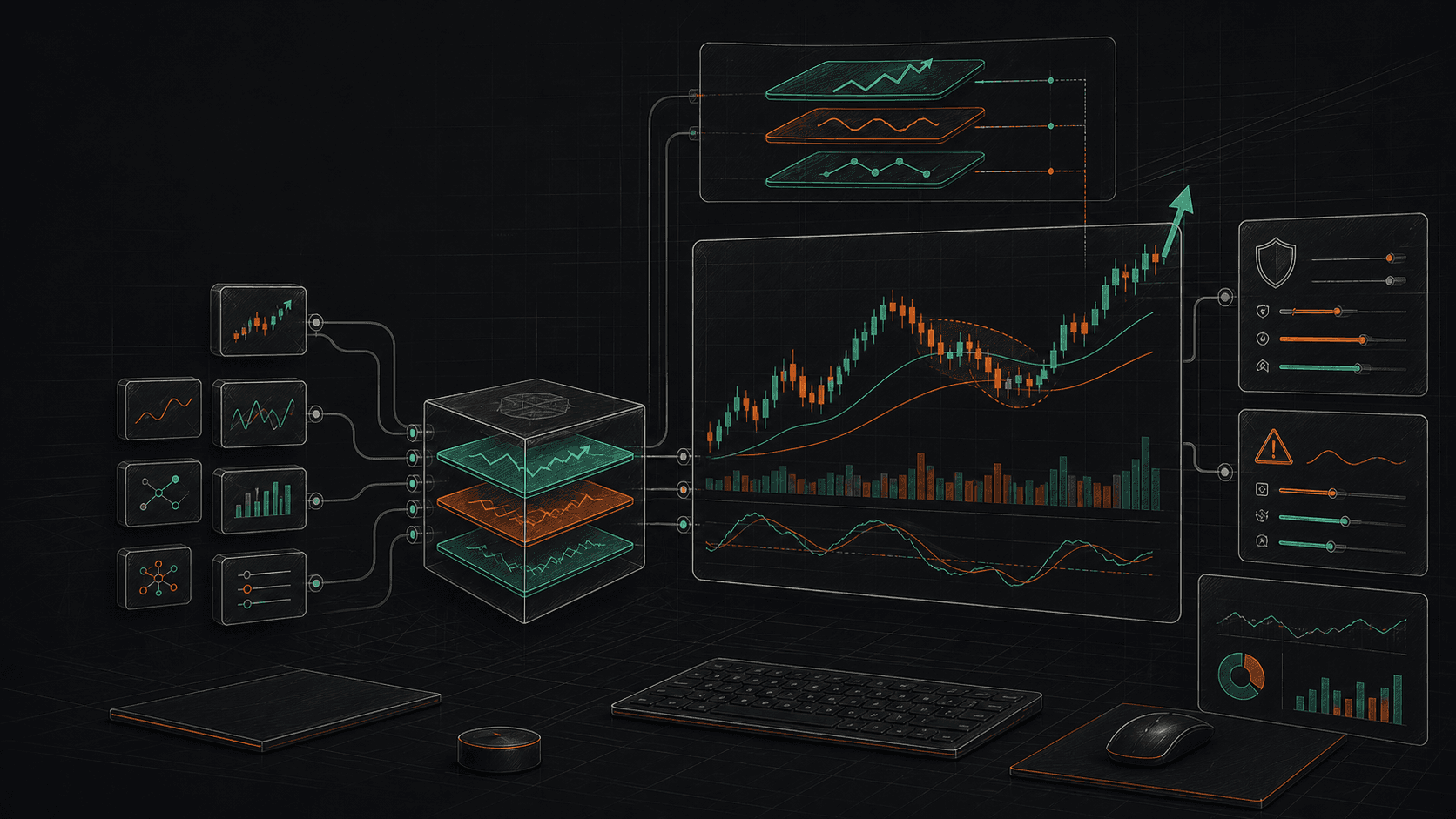
What if I could combine these signals into one trading framework instead of letting them work against each other?
That idea eventually became the 15m Trend Pullback Breakout Fusion Blueprint.
I Was Never Trying to Predict the Market
Many traders spend years searching for the "perfect indicator"—one that tells them exactly when the market will go up or down.
The longer I've traded, the more convinced I've become that:
No indicator can predict the market.
The only thing we can truly improve is the quality of our decisions.
When I designed this Blueprint, I wasn't trying to build something that predicts price.
Instead, I kept asking myself another question:
When is a trade actually worth taking, and when is it better to simply wait?
Sometimes, not trading is the best trade you can make.
Direction Comes First
I've always believed that trading against the trend is expensive.
That's why the first thing this Blueprint does is answer one simple question:
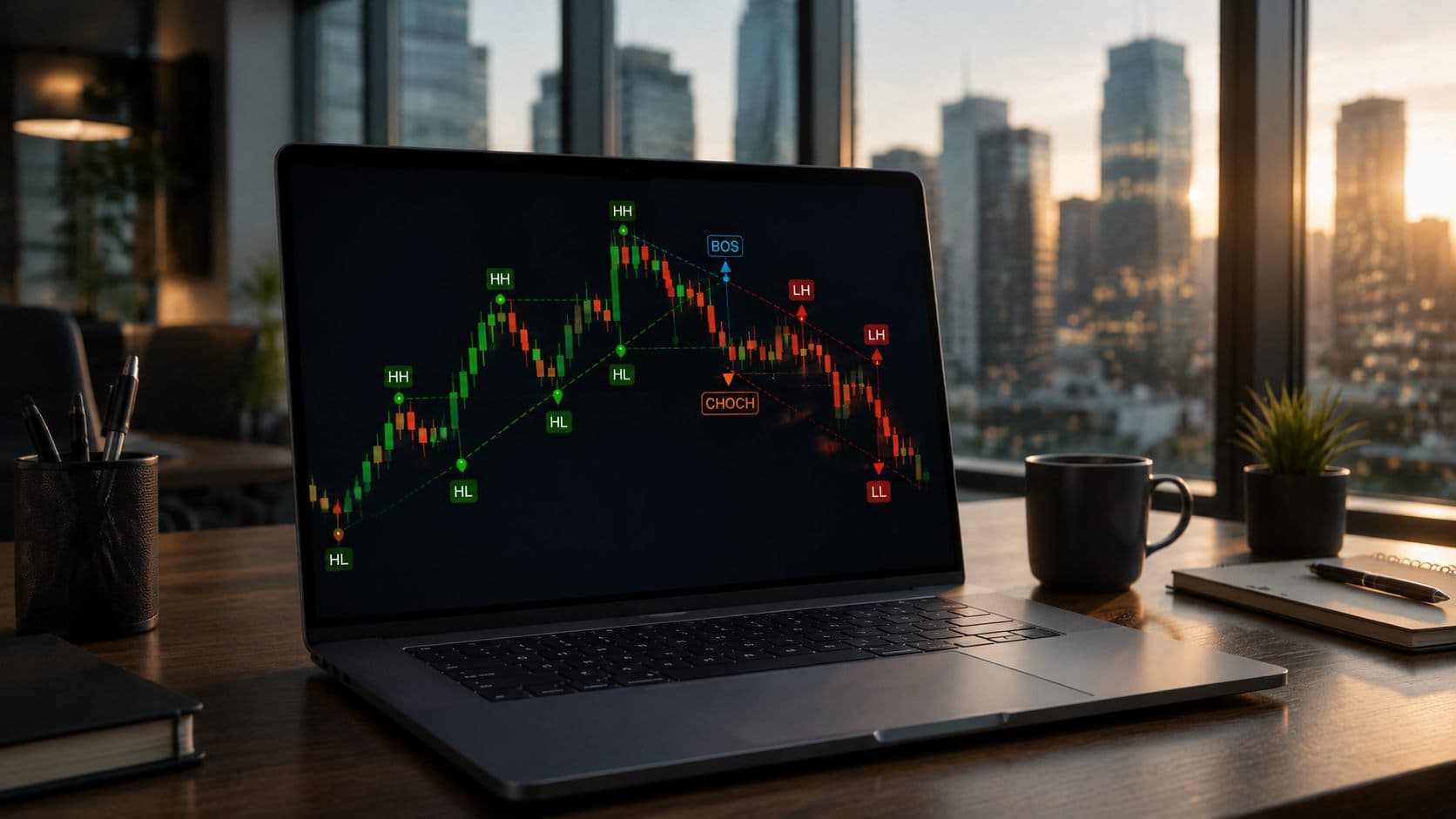
Is there actually a trend?
It doesn't assume the market is bullish just because price moved slightly higher.
It doesn't assume the market is bearish just because price dropped for a while.
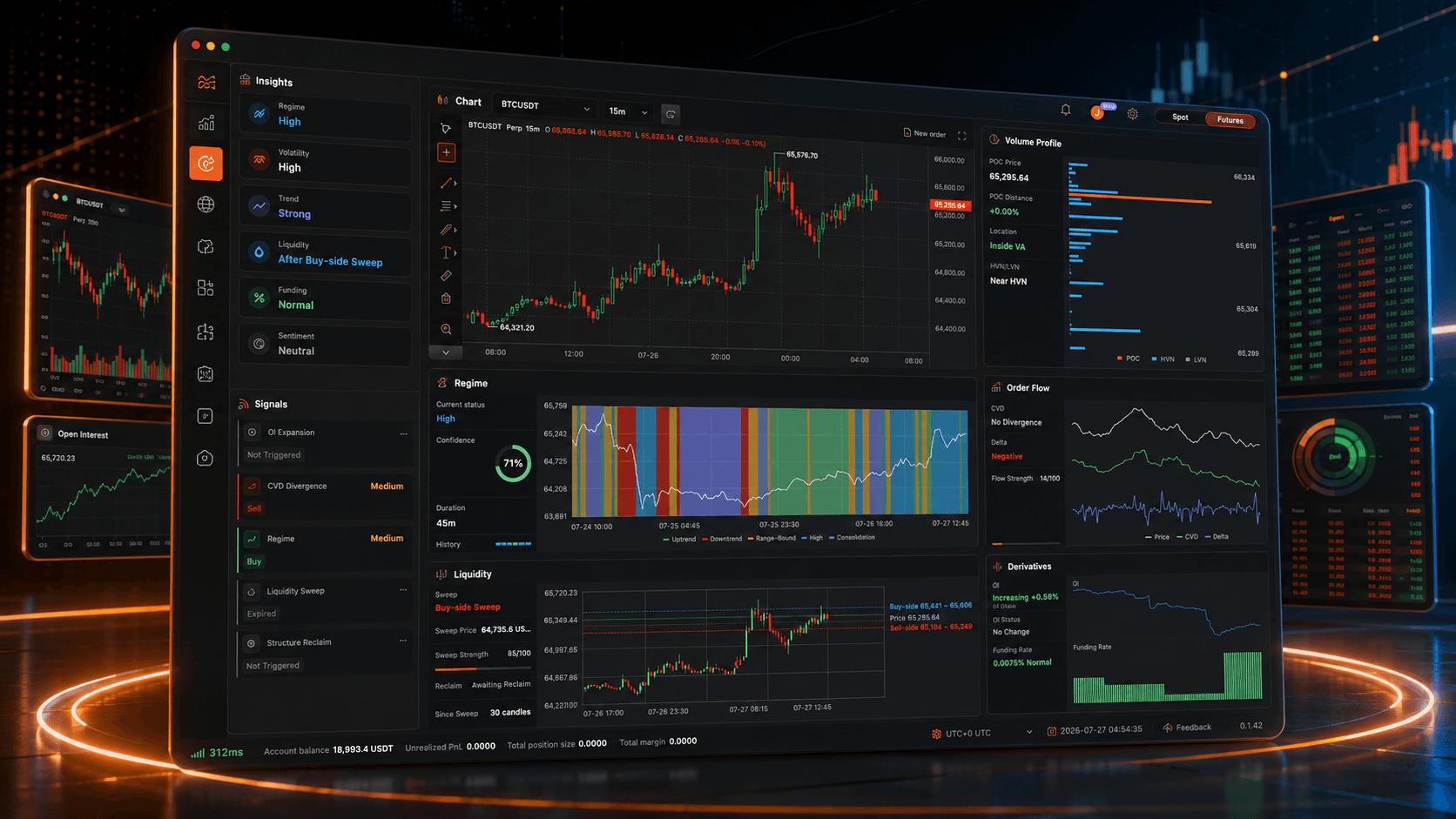
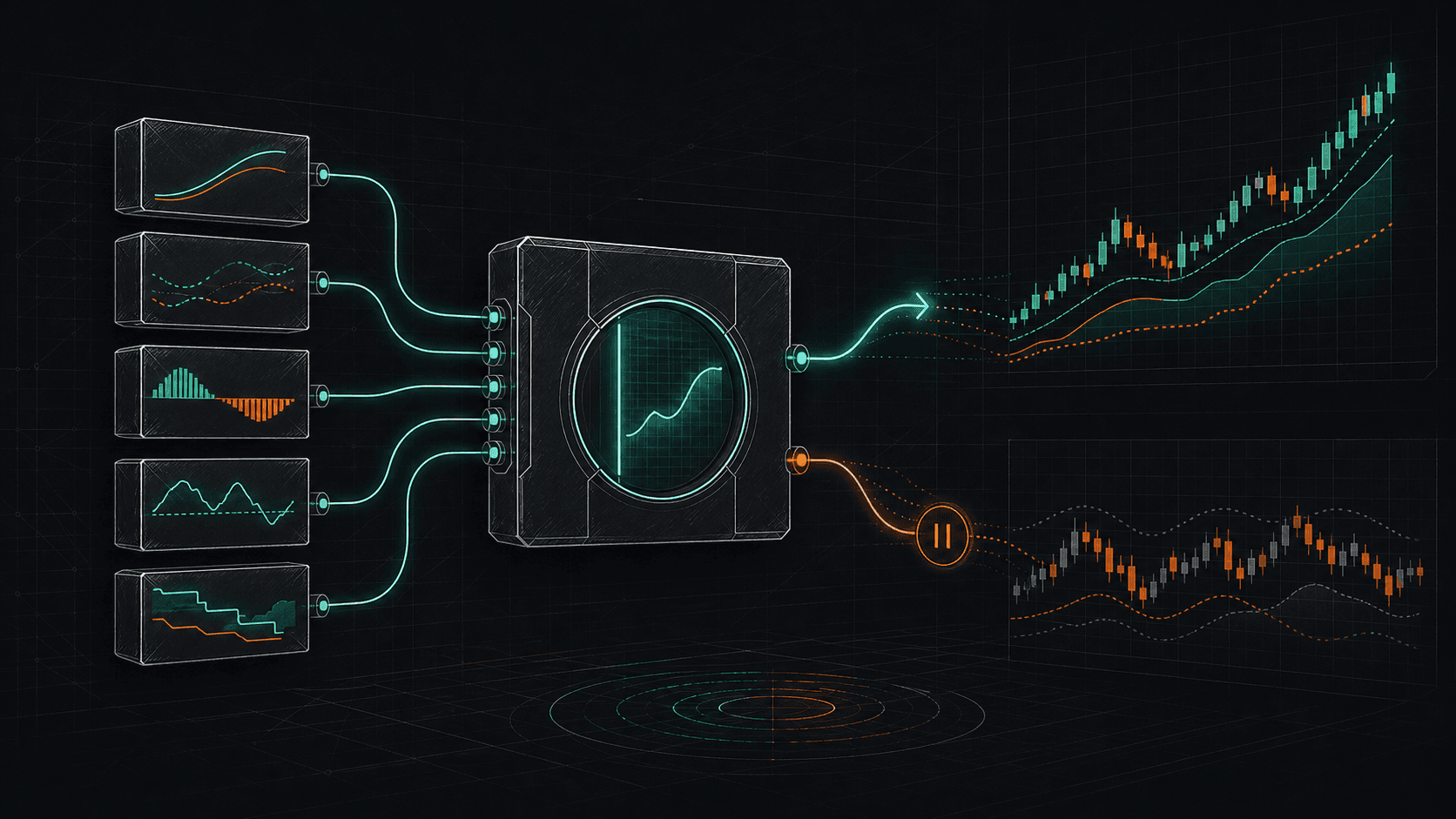
Instead, it combines several tools—including EMA, KAMA, adaptive trend filters, ADX, and SuperTrend—to determine whether a meaningful trend actually exists.
If the market doesn't provide a clear directional bias,
I'd rather do nothing.
Even With a Trend, I Don't Chase Price
Many traders immediately buy after seeing a strong move.
I used to do the same.
Eventually I realized something simple:
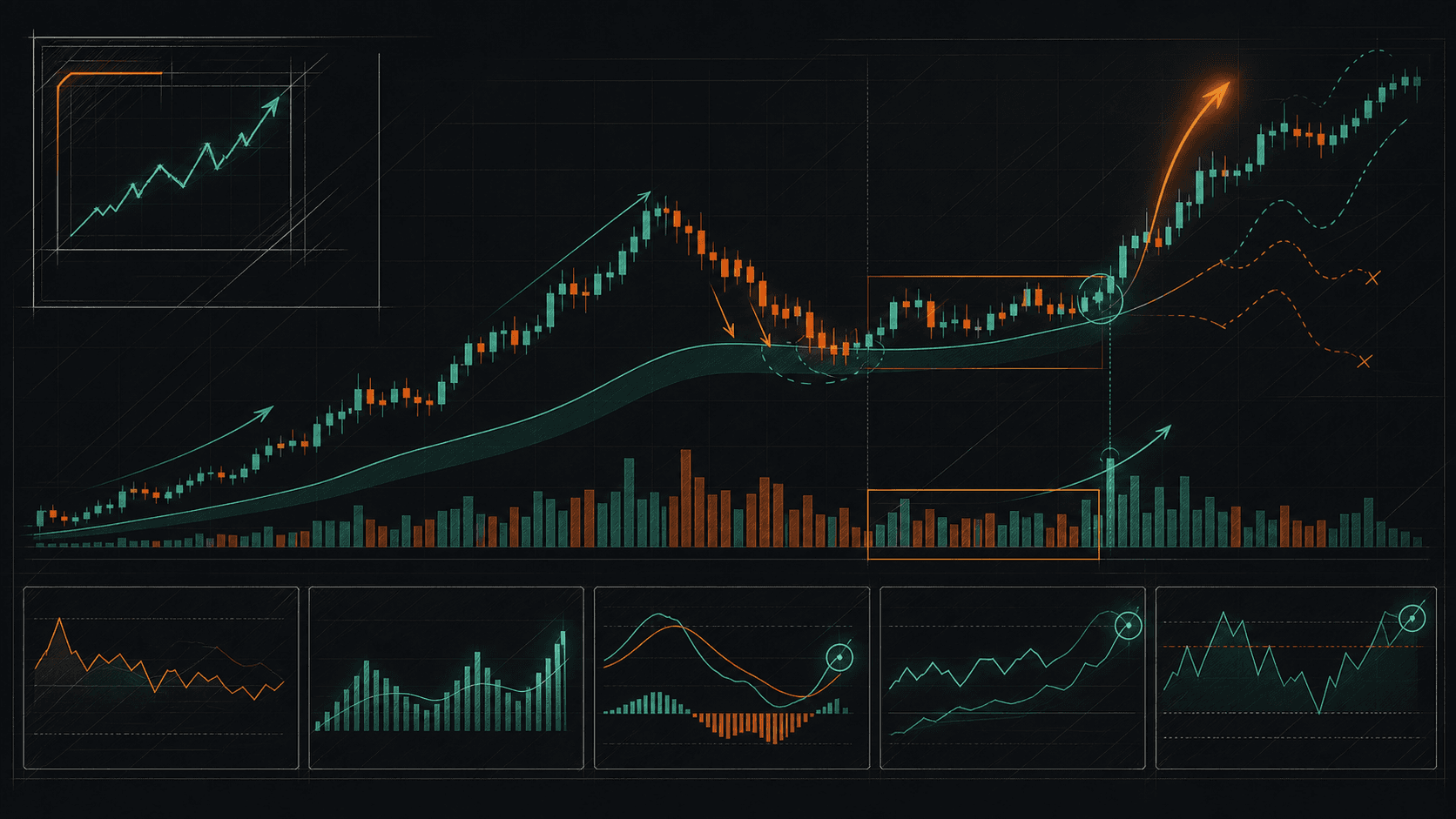
Most trends pull back.
So I changed my approach.
Instead of chasing strength, I'd rather wait for price to return to a more reasonable area.
- During an uptrend, I wait for a pullback.
- During a downtrend, I wait for a rebound.
Yes, this approach may miss the occasional market that never looks back.
But in most situations, it provides a much better entry location.
That's exactly why this Blueprint uses EMA20 pullback confirmation before considering an entry.
A Pullback Alone Isn't Enough
Eventually I discovered another problem.
A pullback doesn't automatically mean it's a good trade.
Sometimes price pulls back...
But volume keeps shrinking.
Volatility disappears.
Money flow weakens.
Those trades rarely have the probability I'm looking for.
So I added additional filters.
For example:
- ATR volatility
- Average trading volume
- WaveTrend
- Momentum
- MFI
I wasn't trying to add as many indicators as possible.
Instead, I wanted the Blueprint to ask one more question:
Does this market still have enough momentum to justify taking a position?
I Don't Want the Blueprint Trading All the Time
Many strategies have one common problem:
The moment they detect a signal, they trade.
I don't like that.
More trades don't automatically produce better results.
This Blueprint intentionally ignores many opportunities.
If:
- the trend isn't clear,
- the location isn't attractive,
- volatility is too low,
- or volume isn't supportive,
it simply waits.
Some days it may only find a handful of valid opportunities.
Personally,
I think that's a good thing.
Risk Matters More Than Profit
When designing strategies, many people start by asking:
"How can I make more money?"
I prefer asking a different question first.
"What happens if I'm wrong?"
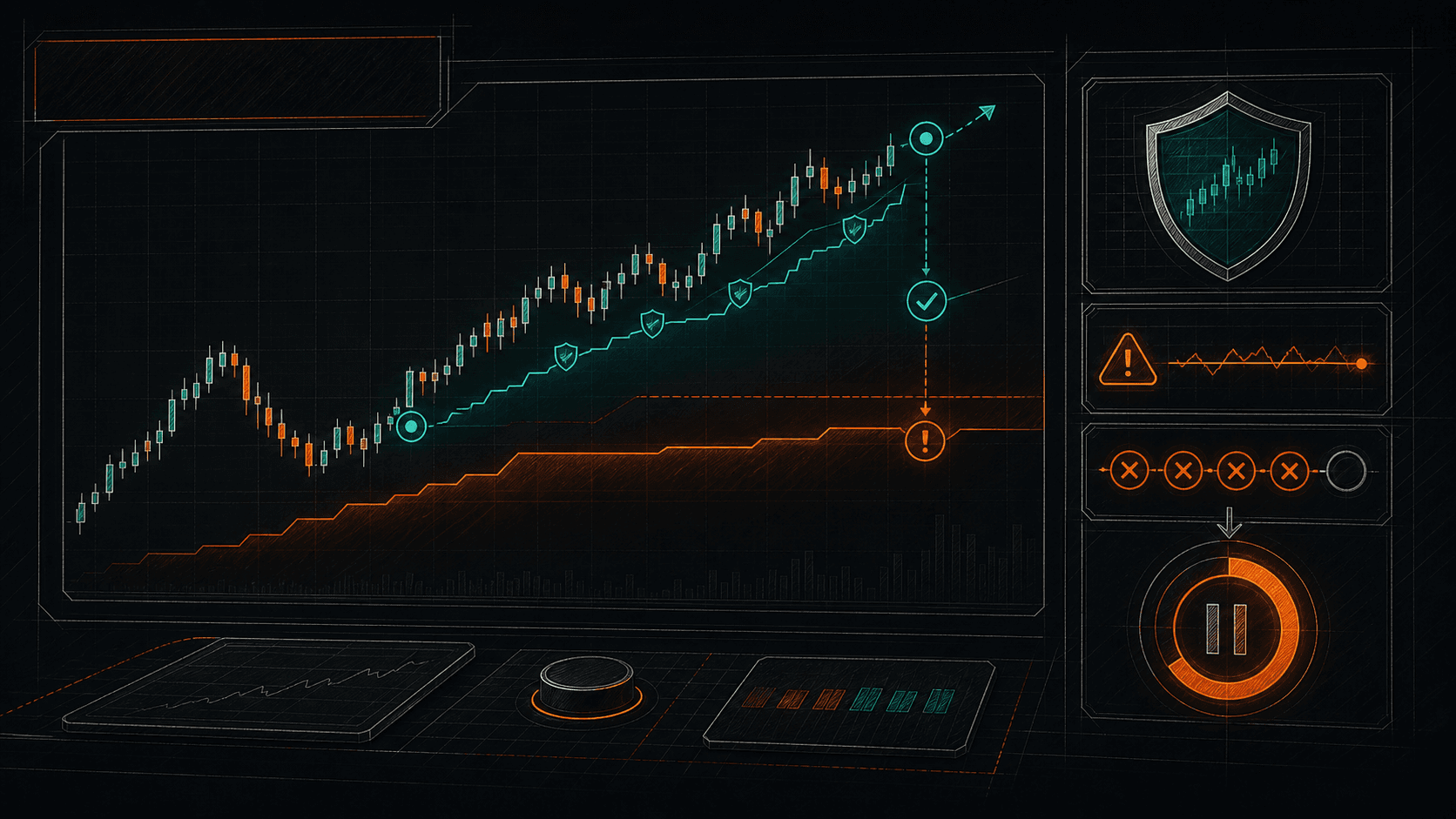
That's why ATR plays an important role in this Blueprint.
If the market proves my idea is wrong,
I get out.
If the market moves in my favor,
the Blueprint gradually protects profits.
I also introduced a cooldown mechanism after losing trades.
Instead of jumping back into the market immediately after a loss,
the strategy waits.
I've always believed:
The biggest enemy in trading isn't one losing trade. It's making the same mistake repeatedly.
Why 15 Minutes?
Some traders love the 1-minute chart.
Others prefer the 4-hour chart.
I eventually settled on 15 minutes.
The reason is simple.
It's not as noisy as the 1-minute timeframe.
It's also much more responsive than waiting for hourly candles.
For traders who prefer short- to medium-term futures trading,
I believe 15 minutes offers a good balance between speed and reliability.
Of course,
it's not the only correct timeframe.
It's simply the one that best matches the way I trade.
I Want This Blueprint to Be Studied
Many people download a Blueprint hoping it will immediately make money.
Honestly,
I'd rather people treat it as a research template.
You can:
- Modify the filters.
- Adjust the position sizing.
- Change the stop-loss and take-profit logic.
- Add your own indicators.
- Or even rebuild it into a completely different strategy.
The important thing isn't copying my parameters.
The important thing is understanding:
- Why direction comes first.
- Why I wait for pullbacks.
- Why breakout confirmation still matters.
Once those ideas become clear,
you'll be able to build strategies that truly belong to you.
Final Thoughts
I've always believed that:
Trading isn't about finding a perfect strategy. It's about eliminating low-quality trades.
That's exactly the philosophy behind 15m Trend Pullback Breakout Fusion.
It doesn't try to capture every market move.
It doesn't promise to predict the next candle.
Instead,
it tries to make sure every trade is supported by multiple pieces of evidence before taking action.
If this Blueprint helps you make fewer emotional trades,
and teaches you to patiently wait for higher-quality opportunities,
then I believe it has already achieved its purpose.
Of course,
it's still just a trading tool—not a guarantee of profits.
Before using it in live trading,
I strongly recommend conducting extensive backtesting and paper trading,
then adjusting position sizing, leverage, and parameters according to your own risk tolerance.
Hopefully,
this Blueprint can become a useful starting point for studying trading logic and building a stronger trading system of your own.